
Teaching and Learning in an Age of AI
I teach at Arizona State University, and every semester the questions my students bring to class about AI get harder, more personal, and more urgent. Not “how does a transformer architecture work” questions—though those come up too. But questions like: Is it cheating if I use AI to help me think? What’s the point of learning to write if a machine can write better? Does using AI make me less ethical? Am I less valuable now?
These aren’t questions a technology tutorial can answer. They’re questions about identity, meaning, and what education is actually for in a world where AI can pass most of the tests we use to measure learning.
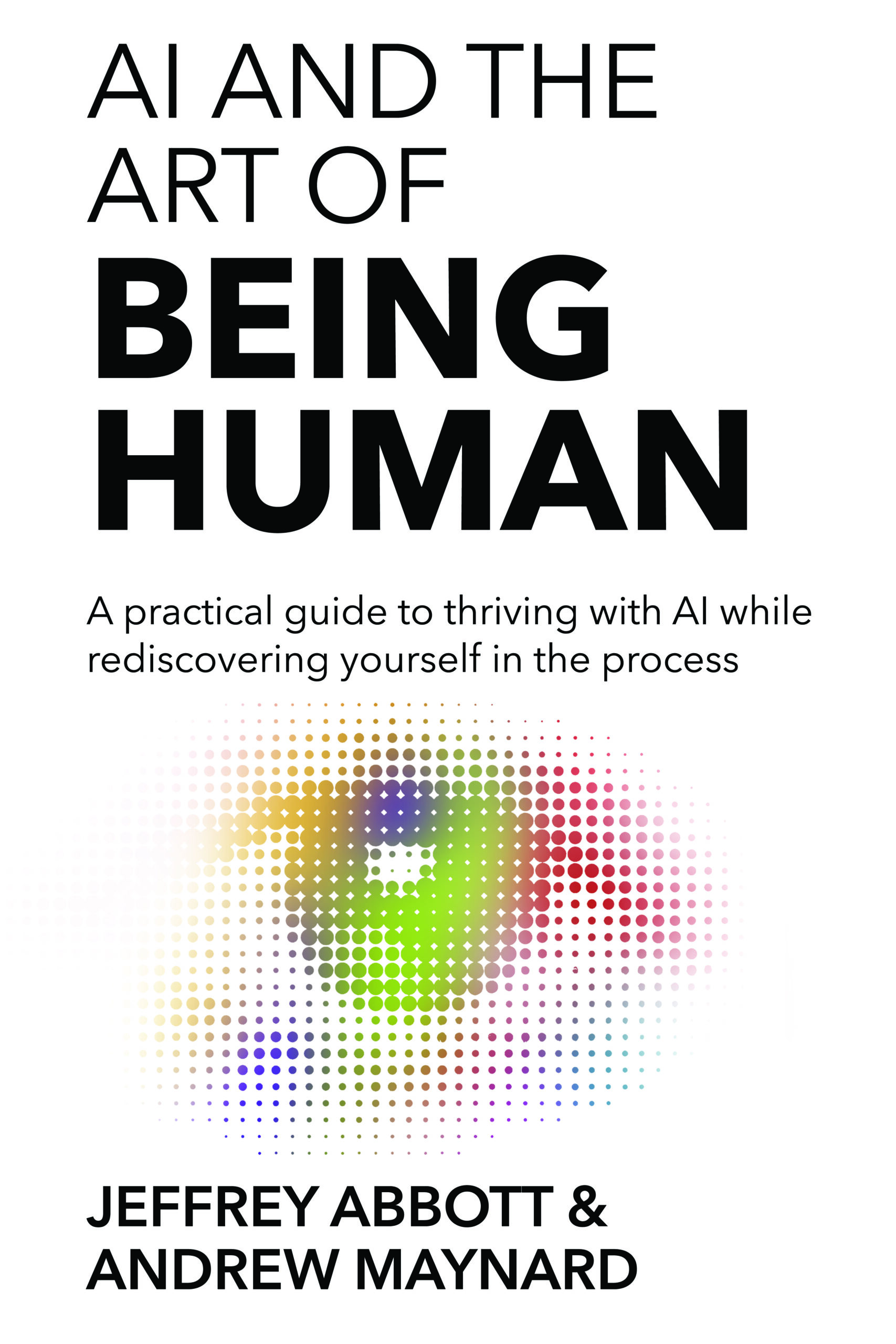
I’ve spent a lot of time sitting with these questions, in my own teaching and in conversations with educators around the world. What follows is a collection of resources drawn from that work and from the book Jeff Abbott and I wrote, AI and the Art of Being Human.
The Instructor’s Guide
Jeff and I developed a comprehensive Instructor’s Guide designed to help educators build courses, workshops, and professional development resources around the book’s ideas. It’s formatted as an AI-readable file — upload it to your AI assistant of choice, and it will help and guide you build syllabi, discussion questions, assignments, and workshop plans tailored to your context. It’ll even help code apps and web pages based on the book if used with AI platforms that are good at coding!
An AI Companion to the Pocket Edition of AI and the Art of Being Human
The AI companion to the Pocket Edition of the book is a separate resource designed for individual readers — but it also works as a classroom tool. It’s a unique way of exploring and using the book that links directly back to the paperback Pocket Edition, and is as versatile as the creativity of the person using it!
Students (or instructors—or anyone for that matter) upload the file to their AI assistant of choice and explore the book’s ideas, characters, and tools through conversation. It’s a way of modeling intentional, reflective AI use while engaging with the book’s content. Works best with Claude, Gemini, or Grok.
Tools that work especially well in educational settings
While all 21 tools can be used in workshops, seminars, or classroom settings more broadly, some are particularly effective for sparking discussion and structured reflection:
The Mirror Test (Prelude) — Have students describe a moment when AI surprised them with how well it seemed to “get” them, then work through the three questions. Opens up conversations about identity and AI that students are rarely given space to have.
The Identity Matrix (Ch. 5) — Students map their Enduring Essence, Evolving Expression, Replaceable Skills, and what’s Yet To Be Cultivated. Works well as a journaling exercise or small-group discussion. Particularly powerful for students anxious about AI making their degree “worthless.”
The Human Qualities Spectrum (Ch. 3) — Ask students to place their skills and qualities along the spectrum from Replicable to Relational to Transcendent. The honesty this requires — admitting that many valued skills are replicable — is where the real learning happens.
The Stress-Test Table (Ch. 6) — Present a scenario (Sana’s deepfake dilemma is excellent for this) and have students work through the four questions: What value is at stake? What’s the reward for compromising? What’s the cost of integrity? What’s the long-term payoff of fidelity? Works well for ethics courses.
The 7-Minute Clarity Pause (Ch. 4) — A practical exercise students can do in real time. Set a timer. Walk through the seven minutes. Then discuss what emerged. Some of the best class discussions I’ve had have followed this exercise.
Approaches to using the book in courses and workshops
The book was deliberately designed to be usable in educational and learning contexts. The fictional narratives work as assigned readings that spark discussion — students see themselves in the characters and engage with the dilemmas more readily than they would with case studies or academic papers. The tools provide structured frameworks for moving from discussion to action.
Some approaches I and others have explored:
As a course text: The book’s four-part structure maps naturally onto a module or semester-long arc. Part I (Mindsets) sets foundations. Part II (Navigating Change) addresses identity and values. Part III (Thriving in Partnership) explores collaboration and creativity. Part IV (Intentional Futures) looks ahead to personal and collective commitment.
For single sessions or workshops: Pick one narrative and its associated tool. Read the narrative together (or assign it beforehand), then work through the tool as a group exercise. Strong pairings for single sessions include: Elena’s mirror moment + the Mirror Test, Dorian’s blindfolded painting + the Human Qualities Spectrum, Sana’s deepfake dilemma + the Stress-Test Table, and Sara’s safety app + the 4-Lens Scan. The Instructor’s Guide is particularly helpful for developing material for single sessions and workshops.
For professional development: The tools were originally designed with organizations in mind. The Intent Map, CARE Loop, and Model Dignity Check translate directly to professional contexts where teams are making decisions about AI adoption.
The characters as teaching tools
The book’s fictional characters span geographies (Munich, Singapore, Dubai, São Paulo, Cairo, Nairobi, Phoenix, and more), professions (founders, teachers, journalists, developers, artists, students), and dilemmas. A few that resonate particularly well with students include:
Wei Lin (Singapore, Ch. 1) — A fifteen-year-old whose AI-enhanced self-portrait is technically superior but somehow less true than his uncertain original. When asked which looks more like how he feels, he admits: “The messy one. But I want to feel like the AI one.” Students immediately connect with this tension.
Kaia (Brooklyn, Ch. 5) — An artist whose signature style gets perfectly replicated by AI, down to the tremor from an old injury. Her response — shifting from identity-as-product to identity-as-practice through live performance — sparks rich discussion about what originality means.
Mateo (São Paulo, Ch. 2) — A student developer whose academic research tool transforms when a seven-year-old asks if it will read to her. The question of who you’re building for — and who you’re leaving out — lands differently when students see themselves in Mateo.
David (Michigan, Ch. 11) — A professor who designs an AI office-hours bot built to make itself obsolete. “Success means students need it less” inverts how students typically think about AI tools and opens up conversations about productive struggle and what learning actually requires.
Broader resources
- The Future of Being Human initiative at ASU, where much of this work is anchored
- My Introduction to Prompt Engineering resources, from a class originally taught at ASI
- The official book website for downloadable tools and additional materials
- The 21 Tools for Thriving with AI hub on this site